

From Frost to Florida: Protecting Your RV Roof Across Climates
Heading South? Get Your RV Roof Ready Before You Roll
When the temperatures drop in the North, thousands of RVers hit the road for warmer weather. Whether your "south" is Florida, Arizona, Southern California, Texas, the Gulf Coast or simply anywhere the thermometer stays above freezing, your RV roof deserves a close look before you leave the driveway.
Your roof is your first line of defense against sun, rain, wind and road debris. A well-maintained RV roof means peace of mind all season long. Here is how to get it ready for the trip south, plus a few other checklists to round out your snowbird prep.
Why Your RV Roof Matters Most Before a Long Trip
A long haul south puts your roof through more than a weekend trip ever does: hours of wind, sun, vibration and changing weather.
- Weather protection: Cold snaps, rain & wind can show up anywhere along your route. A sound roof keeps your interior safe and dry.
- Protecting your investment: Roof damage spreads fast to walls, insulation and flooring. When you catch a small problem early it often beats a major repair later.
- Comfort at your destination: A sealed roof with UV protection helps regulate temperature, keeping you cozy on cool nights and cooler under the southern sun.
Pre-Trip Roof Checklist
Before you head south, take an afternoon to inspect and prepare your RV roof.
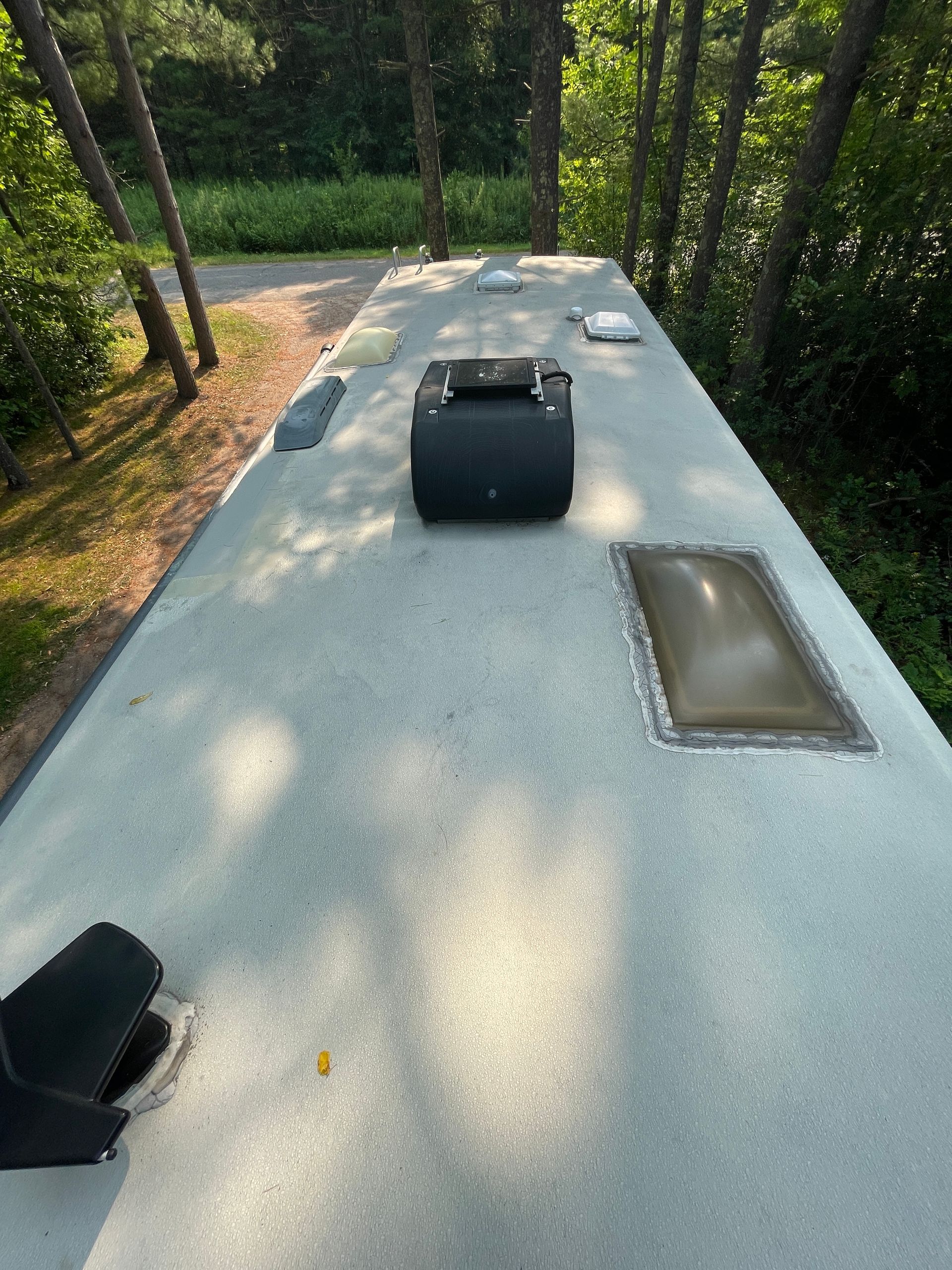
- Inspect seals and seams: Look for cracks, gaps or peeling sealant around vents, skylights, AC units and roof edges. Also look for pinholes, bubbles and lifting at the front cap (more on that below).
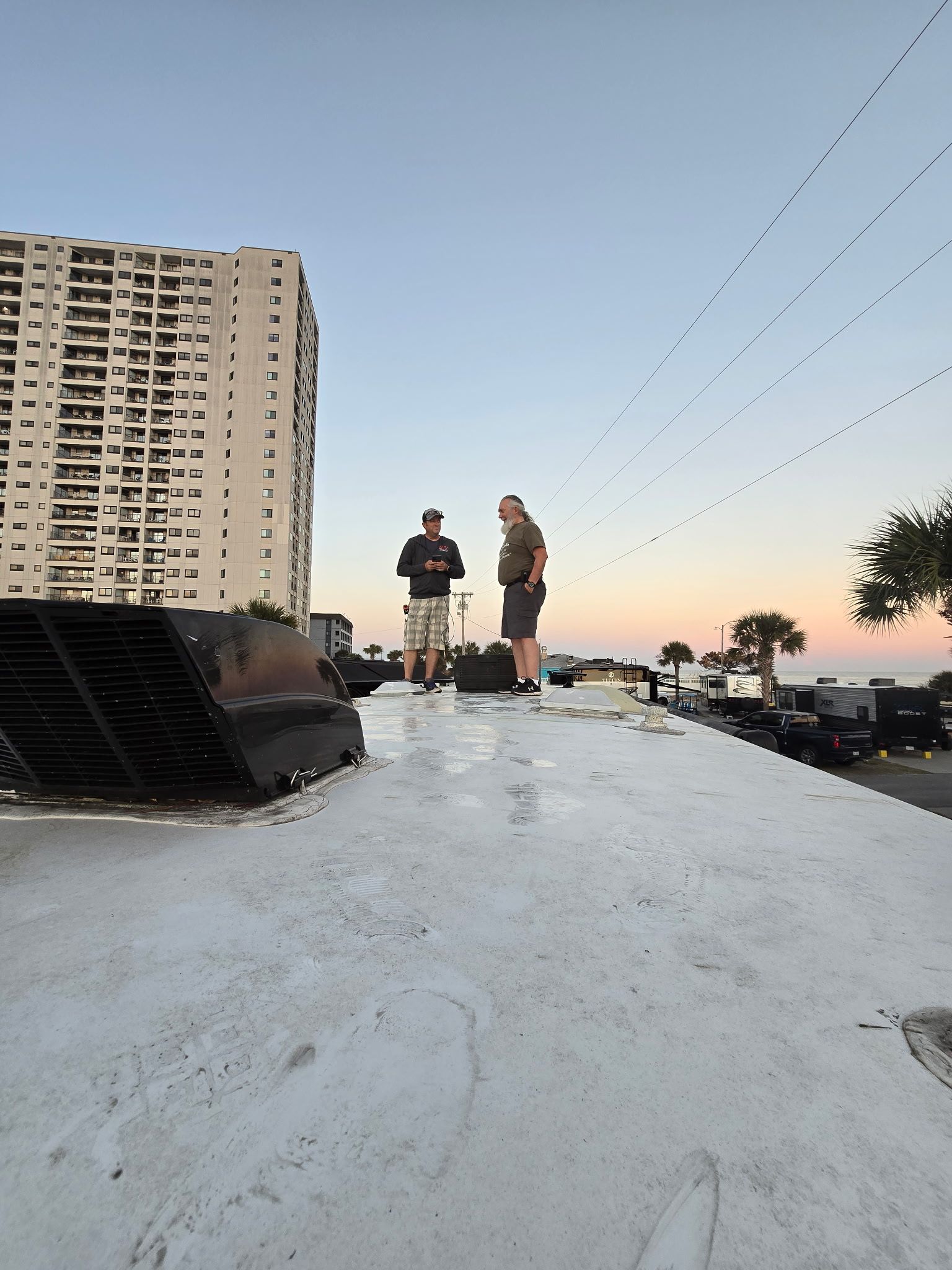
- Check for soft spots: Walk the roof carefully. Soft areas can signal water intrusion.
- Clean thoroughly: Clear debris, leaves and dirt. A clean roof is easier to inspect and prevents buildup.
- Look at the coating of the existing membrane: Chalking, fading or bubbling can mean it is time for a UV-protective or waterproofing treatment. Many treatments are temperature dependent.
- Schedule professional help: If you find damage or wear, do not wait. A quick repair now, prevents bigger headaches in the middle of your trip.
Small Pinholes, Big Problems at Highway Speed
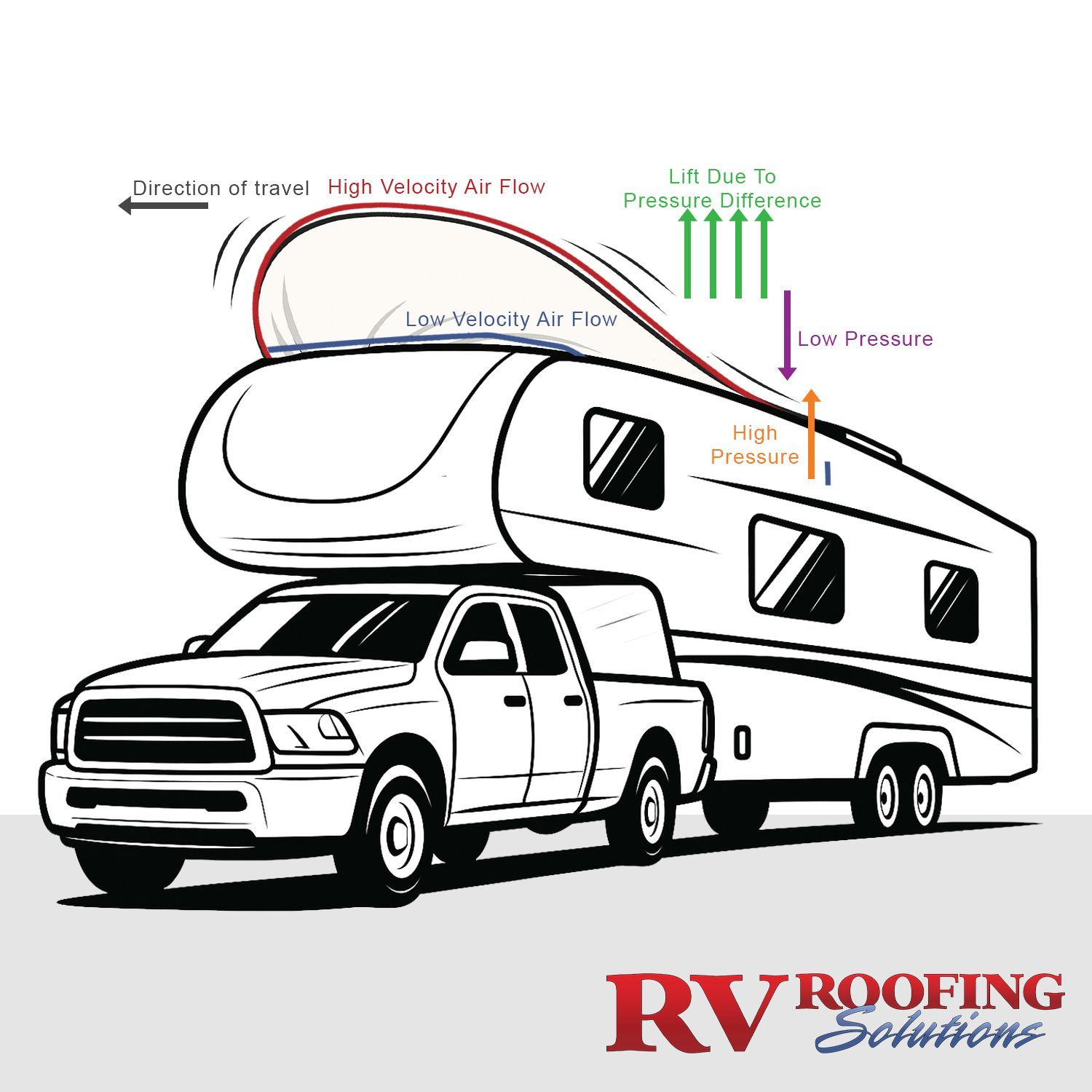
A long haul south means hours at highway speed, and that is when a small roof problem can turn serious. Pinholes, weak seams and spots where the membrane is not fully bonded let air and moisture get under the roof. At speed, airflow over the roof creates negative air pressure above the membrane, and the air trapped underneath pulls it upward. This is called ballooning, otherwise known as a unicorn, and it can tear the roof membrane or lead to hidden water damage, and worse.
What do you need to look for before you roll out?
- Pinholes or tiny punctures in the membrane
- Cracked or gaps in your caulking.
- Bubbles, ripples or lifting, especially around the front cap and edges
- Sealant that has dried out, cracked or pulled away
If you find any of these, do not just glue the roof back down. Ballooning means air and moisture may already be under the membrane, and gluing over it can trap water on an already stretched membrane. Read our full breakdown, RV Roof Ballooning: Why Your Membrane Lifts at Highway Speeds, to see why it happens and how to fix it before you head out.
A Quick Note on Winterizing
If your plans include any stretch in freezing temperatures, or you are storing your RV for part of the winter, winterizing your plumbing and systems is a separate job with its own checklist. Our last blog covers it in full, including roof care by type (EPDM, TPO, fiberglass, metal, vinyl, PVC and more), check that out: How to Winterize your RV Before a Hard Freeze.
Not Leaving Until After the New Year?
Many snowbirds don't roll out until after the Holidays in January, which means your RV will likely sit through weeks of cold nights and warmer afternoons first.
Those constant swings are hard on a roof: sealant stretches and cracks, seams and edges work loose, and water that gets into a pinhole or small crack freezes and widens it. Wet decking gets worse over the winter because water trapped in the wood has nowhere to go and freezes. When water freezes it expands by roughly 9%, so ice inside the decking pushes the wood fibers apart, breaks down the glue between plywood or OSB layers, and loosens the bond between the deck and the roof surface above it.
When it thaws, the wood is a little weaker and holds even more water, so each freeze-thaw cycle does more damage than the last. Wet wood also can’t dry out under a roof membrane or coating, so it stays wet for weeks while mold and rot take hold.
That’s why a repair that looked small in the fall can turn into a much bigger job by spring. The surface can still look fine while the deck underneath is soft, delaminated or rotting, and you often only find the real extent of it once the old roof comes off. The earlier water is stopped, the fewer cycles the decking has to survive, and the less of it you end up replacing.
Do your roof inspection now instead of the week you leave, and take care of small problems while there is still time. If a roof upgrade is on your list, southern installs continue all winter, so you can get on the calendar for your destination before you go.
On the Road: Roof Care Wherever South Takes You
The southern sun is hard on roofs, and a surprise storm can show up anywhere along the way.
- Park smart: Choose shaded spots when you can to reduce sun exposure.
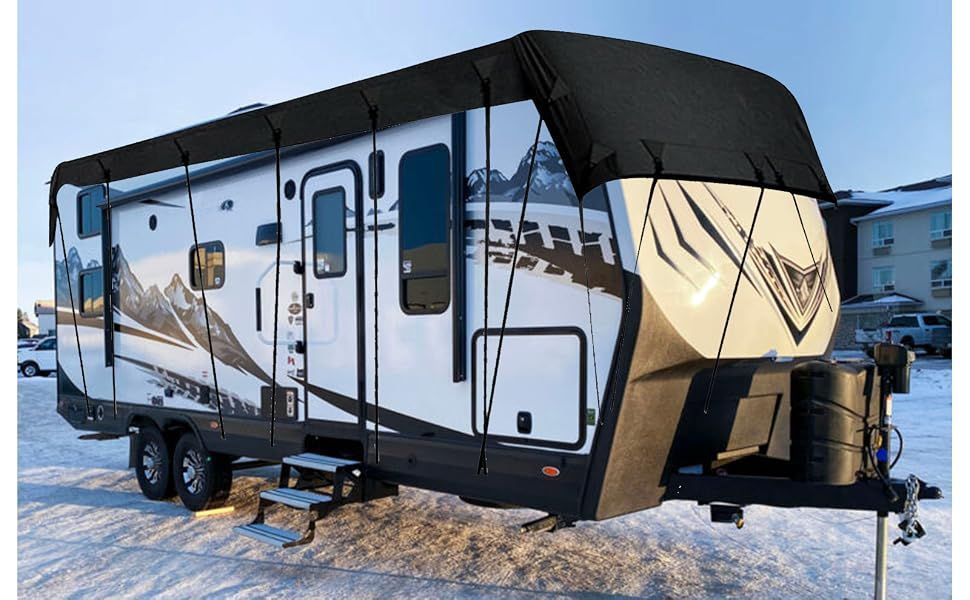
- Cover when stationary: A quality RV cover or carport can reduce UV exposure.
- Check regularly: Even while traveling, look over your roof monthly. Catching issues early keeps the trip smooth.
- After any storm: Check for debris, branch damage and sealant that may have lifted.
Shade, covers and regular checks all help, but they are a routine you have to keep up all season. With an RV Roofing Solutions system, UV protection is built into the product, so you are not constantly cycling through coatings and protectants to shield your roof from the sun. It is one less thing to worry about on a long winter in the south.
Budget Options for Your RV Roof
Watching the budget is smart, and a lot of RVers think about coating the roof themselves. It is important to know that a single layer of coating is not a roof system. It does not include the proprietary fabric we use around every penetration point, the vents, AC and other spots where water most often finds a way in. The product matters too, and the wrong one can work against you when it fails. Silicone, for example, can lift away from the roof without visibly cracking, trapping water against the deck, and it is very hard to repair or cost way more as now it requires a full tear off. We break it down in Silicone RV Roof Coatings: What Can Happen Under the Surface.
Our system, installed with professional materials by one of our technicians, takes about three days in the summer and with shorter days in the winter that means it can take several days more to complete an RV roof system by a trained professional.
Get on the Calendar for a Winter Install
Winter is a smart time to upgrade your RV Roof on while you are parked in the sun. In areas generally south of Interstate 10 (I-10), where weather allows RV Roofing Solutions to work all year, we are scheduling southern installs now. Get on the calendar at 2026 pricing, and your install can be done while you enjoy the season instead of waiting until spring.
Reach out through RVRoofingSolutions.com to check availability near your winter destination and reserve a spot.
Planning a spring or summer install instead? If you know you want a seamless, maintenance-free RV roofing system next year, you can save big by locking in the 2026 install price for a 2027 installation. Get a quote now, and with just a $500 deposit you can reserve your spot and get the roof you want on your own schedule.
Let Us Handle the Roof
If your inspection turns up anything you are not sure about, RV Roofing Solutions can help. We are a veteran-owned, nationwide mobile RV roofing company with over 20 years in the industry, and our technicians come to you. We can often start with a phone diagnosis, so you know where you stand before you pack the rig.
Installs in the northern parts of the country have wrapped up for 2026, because we simply cannot control the weather. What we can control is the calendar. If you know a new roof is in your future, booking now gets you ahead of the winter rush, before the schedule fills up after the RV shows, and gives you more choice of dates. Visit RVRoofingSolutions.com to get started.
You might also like
RV Roofing Solutions' Blog