

How to Winterize Your RV Before a Hard Freeze
And Here's Why Your Roof Comes First
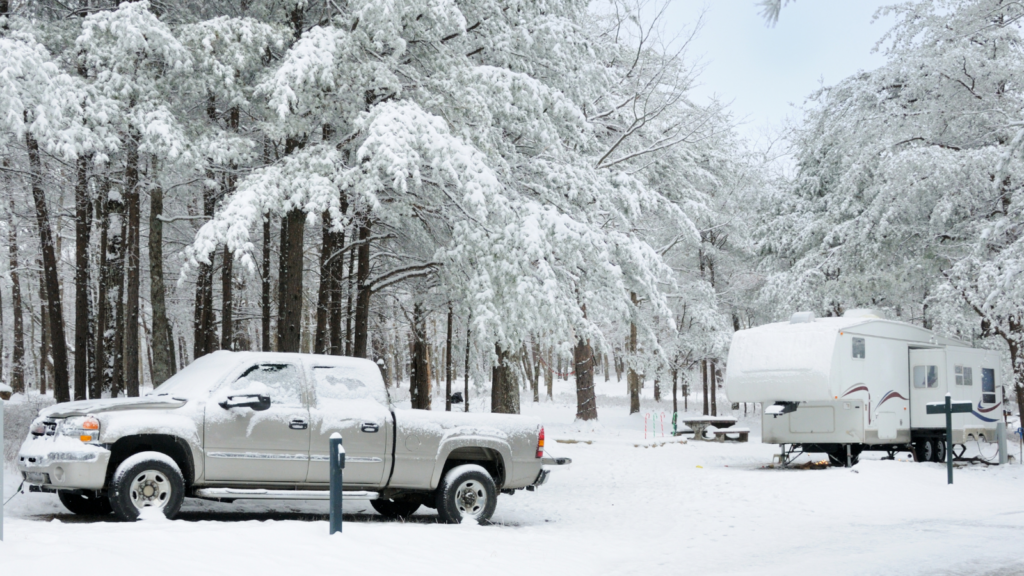
If you haven't winterized your RV and you're not headed south, what are you waiting for?
We know fall camping is amazing with crisp mornings, campfire smoke lingering, and the best foliage of the year outside your window. But I grew up in upstate NY and up north, winter doesn't send a calendar invite. A comfortable afternoon can turn into a hard freeze overnight, and an RV that isn't prepared will pay for it.
Short answer: If you're staying in cold country, winterize your RV before the first overnight freeze, not after. Drain and protect the plumbing, check the batteries and propane, and inspect and seal the roof while the weather is still dry enough to work on it. Skipping any of these steps can mean burst water lines, cracked fixtures, and hidden roof leaks that don't show up until spring.
Why Should You Winterize Your RV Before the First Hard Freeze?
Water freezes at 32°F and expands as it does, which is enough to crack plumbing, fittings, and tanks. Up north, overnight lows can fall 20 degrees or more below the daytime high, so the first freeze often arrives with little warning. Winterizing before that night protects the water system, the batteries, and the roof all at once.

What Happens If You Don't Winterize Your RV?
Winter damage is quiet. You often won't see it until the system thaws and starts leaking, or until spring. These are the most common risks of waiting:
- Burst or cracked water lines. Frozen supply lines, fittings, and faucets can split, then leak inside walls and floors once they thaw.
- A cracked water heater or pump. Water left in the tank, pump, or lines can freeze and damage housings and valves.
- Frozen holding tanks and valves. Frozen gate valves and cracked fittings under the coach are among the most common freeze-related repairs.
- Damaged fixtures and appliances. Toilet valves, washer connections, ice makers, and outdoor showers all hold water that can freeze.
- Drained or damaged batteries. Cold drains batteries faster, and a deeply discharged battery left in freezing weather can be permanently damaged.
- Roof leaks and hidden water damage. This is the one most people overlook, because you can't see the roof from the ground. More on that below.
The common thread: winter damage is cheap to prevent and expensive to fix. A few hours of prep now can save you a repair bill and a lost camping season.

What Happens When an RV Sits Through a Winter Unprepared?
Our Story
I'm not writing this from a textbook. I'm writing it from experience. In fact, I think it's important to point out that just because we live and work in the RV industry, it doesn't mean we are immune to common mistakes.
In 2024, we switched from our 2008 Forest River to our 2008 XAire. The plan was simple: the transporter would pick up the old RV & take it to Texas, and we'd be on our way. But the transporter didn't come before we had to leave, so we put the RV in a storage lot in Indiana. We fully intended to come back in the fall and have it transported.
Then life happened, and that didn't happen either.
The RV stayed in Indiana over the winter. In fact, it stayed there for a whole year, and it went through a full winter freeze that it was never prepared for. We are still finding things that could have been avoided if we had taken the time to prep it, just in case.
The water lines froze and damaged our hot water heater (which then had to be replaced) and our lines had to be meticulously checked. And yes, we had to replace some of the lines too.
Here's the lesson: you don't have to plan on leaving your RV in the cold for the plan to go sideways. Transporters get delayed, schedules change, or you may even have an unexpected hard freeze in an area you don't think you need to winterize. "We'll get back to it in the fall" can turn into a full year. Winterizing is insurance for the plan you didn't make. If there's any chance your RV will sit through a freeze, prep it as if it will.
A year sitting in Indiana meant that our RV experienced a full winter of nights well below freezing, with some stretches of days that never got above it.
How Do You Winterize an RV?
The exact steps vary by rig, so check your owner's manual. Most winterizing follows this order:
- Inspect and seal the roof. Do this first, while you can still get up there safely.
- Drain the water system. Empty the fresh tank, water heater, and all low-point drains.
- Bypass the water heater. This keeps antifreeze out of the tank. Never put antifreeze in the water heater itself.
- Blow out the lines or add RV antifreeze. Use non-toxic RV antifreeze (propylene glycol), never automotive antifreeze.
- Empty and flush the holding tanks. Add a small amount of antifreeze to the drains and traps.
- Remove or maintain the batteries. Store them fully charged, or keep them on a maintainer.
- Prep the propane and appliances. Check connections and empty anything that holds water.
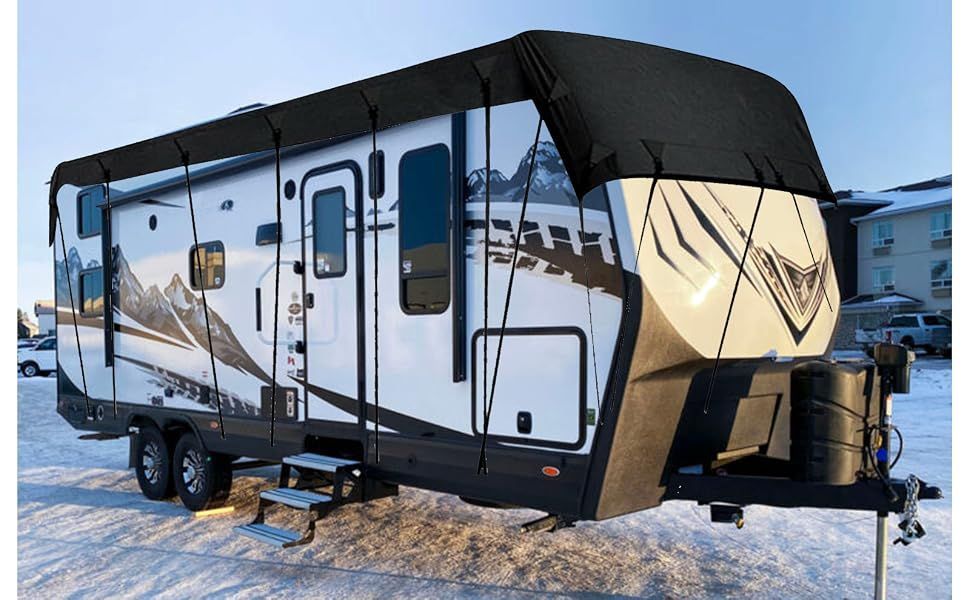
- Protect the exterior and tires. Cover vents as needed, keep tires off cold, damp ground, and consider a breathable cover.
Is RV Roof Care Part of Winterizing?
Your roof takes more abuse than any other part of your RV. It sits in the sun all summer and faces UV rays & weather all year, and it's the one place a small problem can quietly become a major one. Heading into winter, it's under the most stress it will face all year. This is the part of winterizing that most guides skip, and it's the one that can cost the most to ignore.
How does winter damage an RV roof?
- Freeze-thaw cycles. Water gets into a tiny crack, a lifting seam, or a worn spot around a vent. It freezes and expands, widens the gap, then thaws and lets in more. Repeat that through a winter and a pinhole becomes a leak.
- Snow and ice load. Wet snow is heavy, and ice that builds up against edges and seams puts steady pressure on areas that are already weak.
- Aging sealant. Sealant around vents, skylights, air conditioners, and accessories hardens and shrinks with sun exposure, and it gets even more brittle in the cold.
- Leaks you can't see. A slow winter leak doesn't drip on your pillow. It soaks into the roof structure and walls, where it can cause soft spots, delamination, rot, and mold before you notice a stain.
What are the risks of heading into winter with an unprepared roof?
- Water intrusion that damages the ceiling, walls, floor, and insulation
- Structural damage and rot that cost far more than the roof repair would have
- Mold and mildew, which are a health problem as well as a repair problem
- A small, inexpensive repair turning into a major one by spring
- A lost camping season while your RV waits in a shop
A roof that needed a minor fix in October or November can become a major project in April. That's the part that surprises people.
When is the best time to inspect and repair an RV roof?
Before the first freeze. Roof coatings and repairs need mild, dry conditions to cure properly, and once real winter arrives in the north, that window closes and repairs often have to wait until spring. Right now, while you can still get on the roof, is the time to find out what shape it's in.
Why do so many RVers skip roof checks?
Out of sight, out of mind. The truth is that many RV owners don't check the roof often enough, and some hardly think about it at all. You walk around the rig, you check the tires, you look at the slides, but the roof is up there where you can't see it. Others do think about it and avoid it because they're afraid to get up there. That's a fair concern, and it's nothing to be embarrassed about.
The roof is the one part of your RV where a problem can grow for months before you see any sign of it. If there is water leaking in, it often means the wood is saturated & by the time there's a stain on the ceiling, the water has usually been working its way in for a while.
If roof checks fall off your radar, or climbing up there makes you nervous, these steps help:
- Put it on the calendar. Check your roof four times a year, once each season, just like an oil change. Take photos every time and keep them with the date. In fact, take the time to put them in a google drive.
- Start inside. Look at the ceiling around vents, the AC, and skylights for stains, discoloration, or soft spots, and notice any musty smell. An interior check doesn't replace a roof inspection, but it can tell you a lot.
- Know your roof before you walk on it. Not every RV roof is made to be walked on. Check your manufacturer's guidance first, and never climb on a wet, icy, or frosty roof.
- Use a safe, stable ladder. If you do go up, have someone with you on the ground.
- Let a professional go up for you. If you're not comfortable, you don't have to. A roofing pro can inspect the roof safely, tell you what condition it's in, and give you a straight answer before winter arrives.
How Do You Inspect Your RV Roof Before Winter?
If the roof is dry and safe to walk on, here is what to check. If you're not sure how to do it safely on your roof type, get a professional inspection.
- Clean it first. Sweep off leaves, needles, and debris, which hold moisture against the roof and hide problems. This is also a great time to wash the roof.
- Check every seam and edge. Look for cracks, gaps, bubbles, lifting, or peeling along seams, the front and back caps, and edges.
- Inspect all sealant. Check around vents, the AC unit, skylights, antennas, and every other penetration. Cracked, dried-out, or missing sealant is a leak waiting to happen.
- Look for soft spots, bubbles, or wrinkles. These can mean moisture is trapped under the surface. Decking that is soft or spongy indicates there may be a leak.
- Check inside, too. Look at the ceiling around vents, the AC, and skylights for stains, discoloration, or a musty smell, and press gently for soft areas.
- Document what you're unsure about. Take photos and get a second opinion before the weather changes.
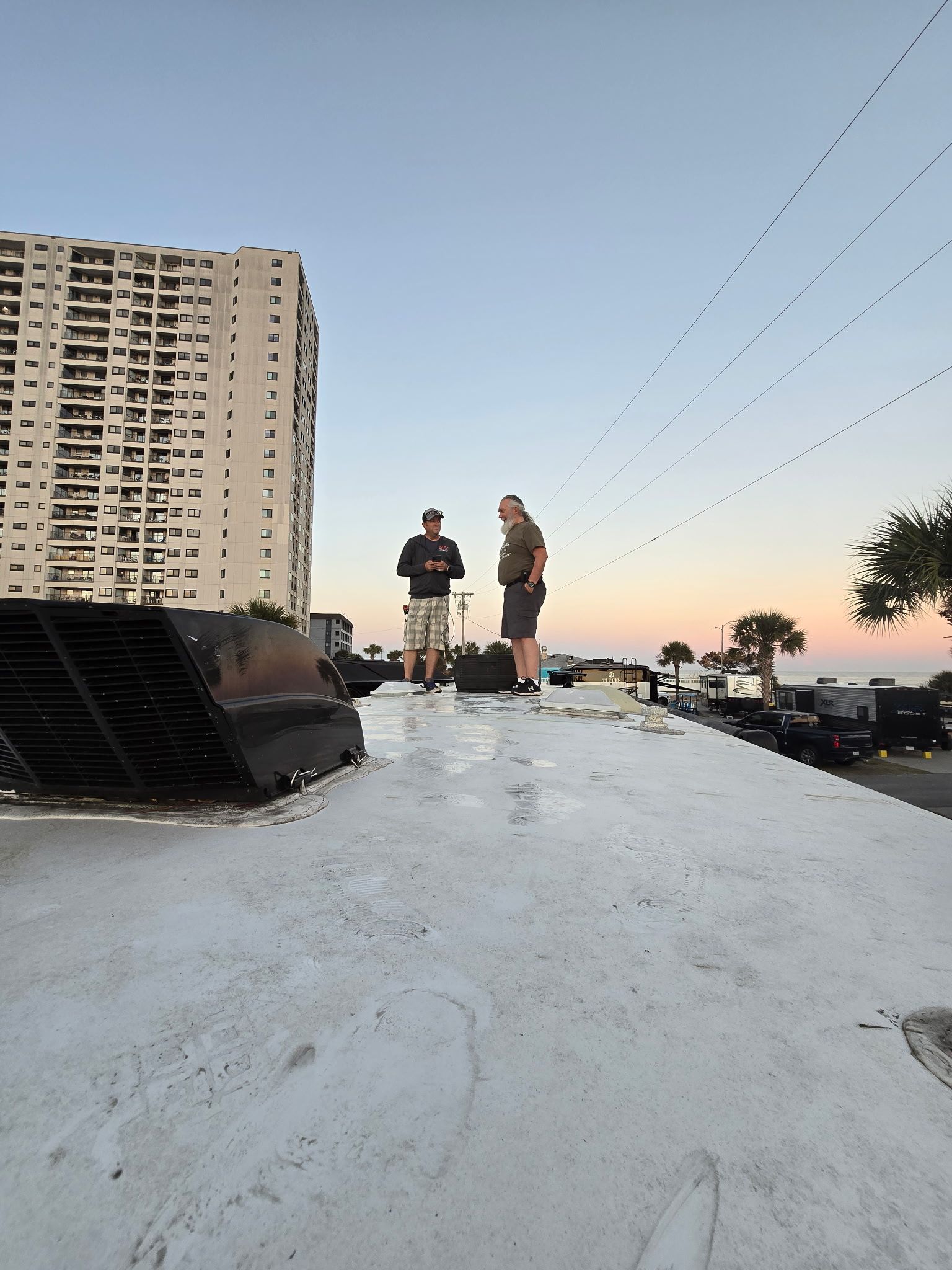
Safety notes: don't walk on a roof that's wet, icy, or frosty. If you get morning dew or are near the ocean this can get especially tricky. Never use sharp tools to remove ice or snow, because cutting the roof surface creates the very leaks you're trying to avoid.

Is a Quick Roof Fix Worth the Risk?
A quick fix done wrong can turn a small leak into thousands more dollars in unexpected repairs. A tube of sealant or tape from the hardware store might stop a drip for a few weeks, but it can also hide the problem while water keeps spreading underneath.
What happens when a rushed RV roof repair gooes wrong?
- Compatibility problems. RV roofs are not all the same material, and coatings, sealants, and tapes are not interchangeable. The wrong product over your existing roof can fail to bond, peel, or react with the surface underneath.
- Trapped moisture. Sealing over a wet, dirty, or already damaged area locks water in. The roof looks fixed while the decking and walls quietly rot.
- A bigger job later. Failed or incompatible products usually have to be removed before a proper repair can be done, which adds labor and cost to a job that started small.
- Warranty trouble. Using the wrong product, or walking on a coating before it cures, can void a warranty on the roof or on a professional repair.
- Cold-weather timing. Products applied in cold or damp conditions may not cure properly, so a rushed late-fall patch is the most likely to fail.
A patch is not a roof plan, and a single layer of any kind of coating is not a roof system. If the roof is the only thing standing between your RV and a northern winter, you want a complete system: built-in UV protection, repairs integrated into the system, and reinforcement around the penetrations where leaks most often start. Doing it right once costs far less than paying to undo it and fix the water damage behind it.
That's exactly what we do at RV Roofing Solutions. We have more than 20 years of experience in RV roofing, our technicians come to you anywhere in the country, and our work is backed by a 10-year material and labor warranty. We can often diagnose what's going on over the phone, or with photos or a video call so you know where you stand before you commit to anything.
Frequently Asked Questions About Winterizing Your RV
What temperature do I need to winterize my RV?
Winterize before nighttime lows are forecast to reach 32°F, especially if the RV will sit unattended. Exposed plumbing and tanks under the coach can freeze after several hours at or below freezing, and the first freeze often arrives suddenly.
Can I use my RV in winter without winterizing it?
Sometimes. Cold-weather camping is possible with a four-season rig, a heated water hose, tank heaters, and skirting. But if the RV will sit unused or the temperature will drop below freezing while it's unattended, it really needs to be winterized.
Can snow and ice damage an RV roof?
Yes. Heavy snow and ice put stress on seams and edges, and meltwater can refreeze in small cracks and widen them. Remove snow carefully with soft tools, never sharp ones, and never walk on an icy roof.
How much does snow weigh?
A cubic foot of light, fluffy snow weighs roughly 5 to 7 pounds. Wet, heavy snow can weigh up to about 20 pounds per cubic foot, and ice weighs close to 60 pounds. That means a foot of snow can put roughly 5 to 20 pounds on every square foot of your roof. On an RV roof of about 256 square feet (8 by 32 feet), that is around 1,300 to 5,100 pounds, and ice or a rain on top of snow makes it heavier. These are estimates, since snow density varies widely.
Check your manufacturer's guidance on roof load limits. If you need to clear snow, do it carefully with soft tools, never sharp ones, and never walk on an icy roof.
How often should I inspect my RV roof?
At least four times a year. Once before winter and once in spring. Inspect it again after severe weather or any time you notice a stain, soft spot, or musty smell inside.
How can I tell if my RV roof is leaking?
Look for water stains on the ceiling or walls, soft or spongy spots, bubbling or peeling roofing material, a musty smell, and cracked or missing sealant around vents and other penetrations.
Can an RV roof be repaired in winter?
Often only in a limited way. Coatings and many repairs need mild, dry warm weather to cure properly, so cold conditions usually push full repairs to spring. That's why a pre-winter inspection matters.
Winterizing isn't optional if you're staying in the cold, and it's not just about the plumbing. Drain and protect your water system, take care of your batteries and tires, and look up. Your roof has to hold through everything winter throws at it, with no one watching.
Not sure what shape your roof is in? The truth is, no RV roof is set-it-and-forget-it.
Our roof system is an upgrade for any existing RV roof, and a complete system with UV protection built in, not a patch. Reach out to RV Roofing Solutions before the snow flies for a free consultation and quote. No one is obligated to approve an estimate.
Timing matters, too. Getting on the calendar for 2027 can lock in 2026 prices, which could mean significant savings. Smart shoppers get the quote now and decide with the numbers in hand.
You might also like
RV Roofing Solutions' Blog