

What UV Exposure Is Really Doing to Your RV Roof & What You Can Do About It
The sun isn't your roof's only enemy.
And indoor storage doesn't protect you as much as you think.
Here's the honest truth about UV damage, elevation, warning signs, and what actually extends your roof's life.
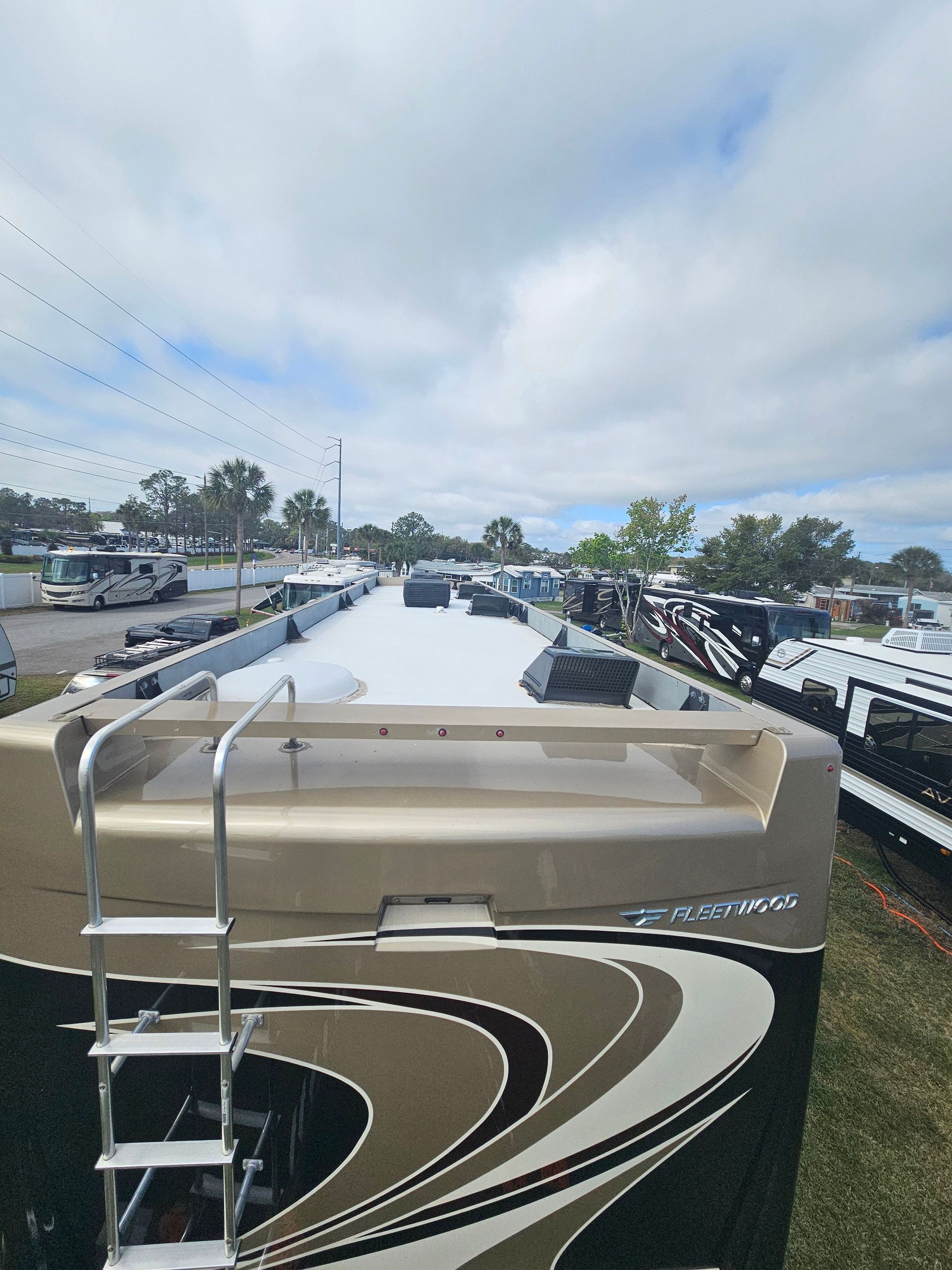
Your RV roof lives a hard life. Rain, wind, tree sap, hail, debris — it takes a beating from every direction. But the damage most RV owners don't see coming is also the most constant: ultraviolet radiation. UV exposure is the silent accelerant behind most premature roof
membrane failure, and by the time you notice the signs, you're often already looking at serious repair work.
This post covers what UV actually does to your roof, why the sun isn't the only source of UV damage, why indoor storage helps but doesn't protect you as much as most people assume, how altitude quietly makes things worse, what early warning signs look like, how long your
roof membrane is actually supposed to last — and what RV Roofing Solutions can do to extend its life before it fails.
What UV Radiation Actually Does to an RV Roof
Ultraviolet radiation is part of the electromagnetic spectrum emitted by the sun. You can't see it, but it's working on your roof every single day the sky isn't completely overcast — and even then, UV passes through cloud cover at significant levels.
On a molecular level, UV radiation breaks down the polymer chains that give roofing membranes their flexibility and waterproofing integrity.
- EPDM (rubber) roofs, this causes the surface to oxidize, dry out, and eventually chalk and crack.
- TPO and PVC membranes, UV accelerates brittleness and seam degradation.
- Fiberglass roofs, UV is the primary reason you end up with that chalky, dull, oxidized surface that no amount of
washing will fix.
The process isn't dramatic — it's cumulative. Every hour of exposure adds up
Is the Sun the Only Source of UV Damage?
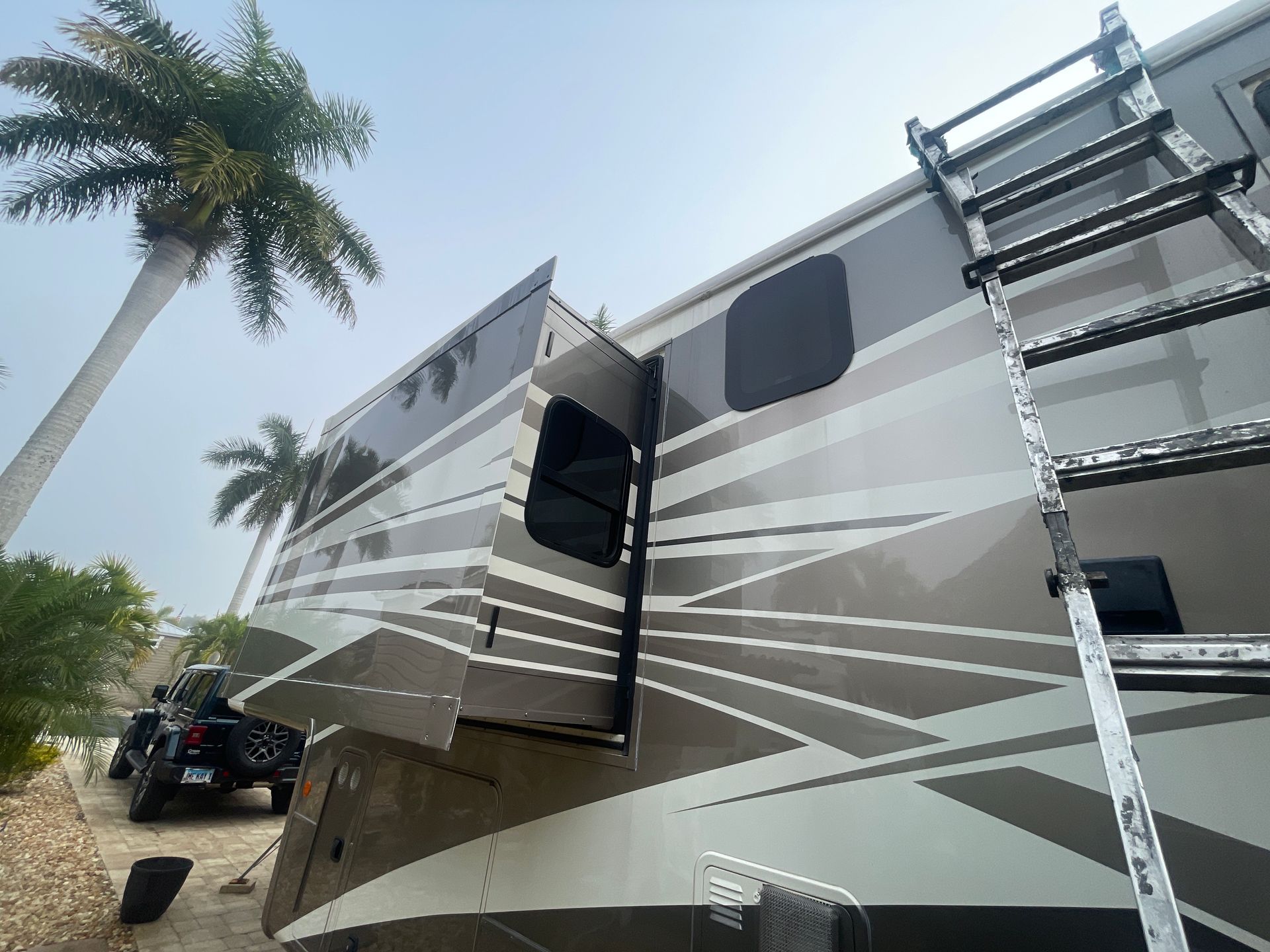
No. This surprises a lot of RV owners. The sun is the primary source, but it's not the only one.
Here's what else contributes to UV damage on your roof:
- Reflected UV. Water, concrete, sand, and especially snow reflect significant UV radiation upward onto surfaces that aren't directly facing the sun. If you're parked near a lake, a snowy field, or even a white gravel lot, your roof is absorbing reflected UV even in low-sun conditions.
- Diffuse (scattered) UV. Even on fully overcast days, up to 80% of UV radiation reaches the ground through cloud diffusion. Your roof doesn't get a day off just because it's cloudy.
- Partial shade. Trees and awnings block visible light but allow a portion of UV through, especially at the edges of the shaded area. Partial shade gives a false sense of protection.
- Time of year. UV intensity is highest May through August, but meaningful UV exposure occurs year-round — including in winter months for full-timers and snowbirds in southern states.
“But I Store Mine Indoors...” — Here’s What That Means (and Doesn’t)
Indoor storage absolutely helps. It's one of the best things you can do to slow UV degradation between trips. But it doesn't reset the clock & it doesn't always protect you from what happens when the rig comes out.
Think about how most weekend and seasonal RVers actually use their rigs:
- The rig lives in a garage or covered storage for 10 months of the year.
- Then it comes out for a long weekend in the Rockies at 9,000 feet.
- Or a two-week run down to the Florida Keys in July, parked in full sun near open water.
- Or a month in the Sonoran Desert, where the UV index regularly hits 11+.
Your roof is absorbing more UV in two days at 9,000 feet than it would in two weeks parked at sea level in mild weather.
Those concentrated bursts of high-UV exposure — especially at elevation or in desert and coastal environments — do real damage, even if the rig spends most of its life safely sheltered.
Indoor storage reduces cumulative exposure. It doesn't eliminate it. The trips you take matter enormously — and a roof that's "protected" in storage for most of the year can still show accelerated wear if those active months happen at altitude or in full desert or
coastal sun.
The takeaway: store indoors when you can. And inspect your roof every single time it comes out of storage — before the season starts and after it ends.
The Elevation Factor: Why Higher Ground Means Faster Damage
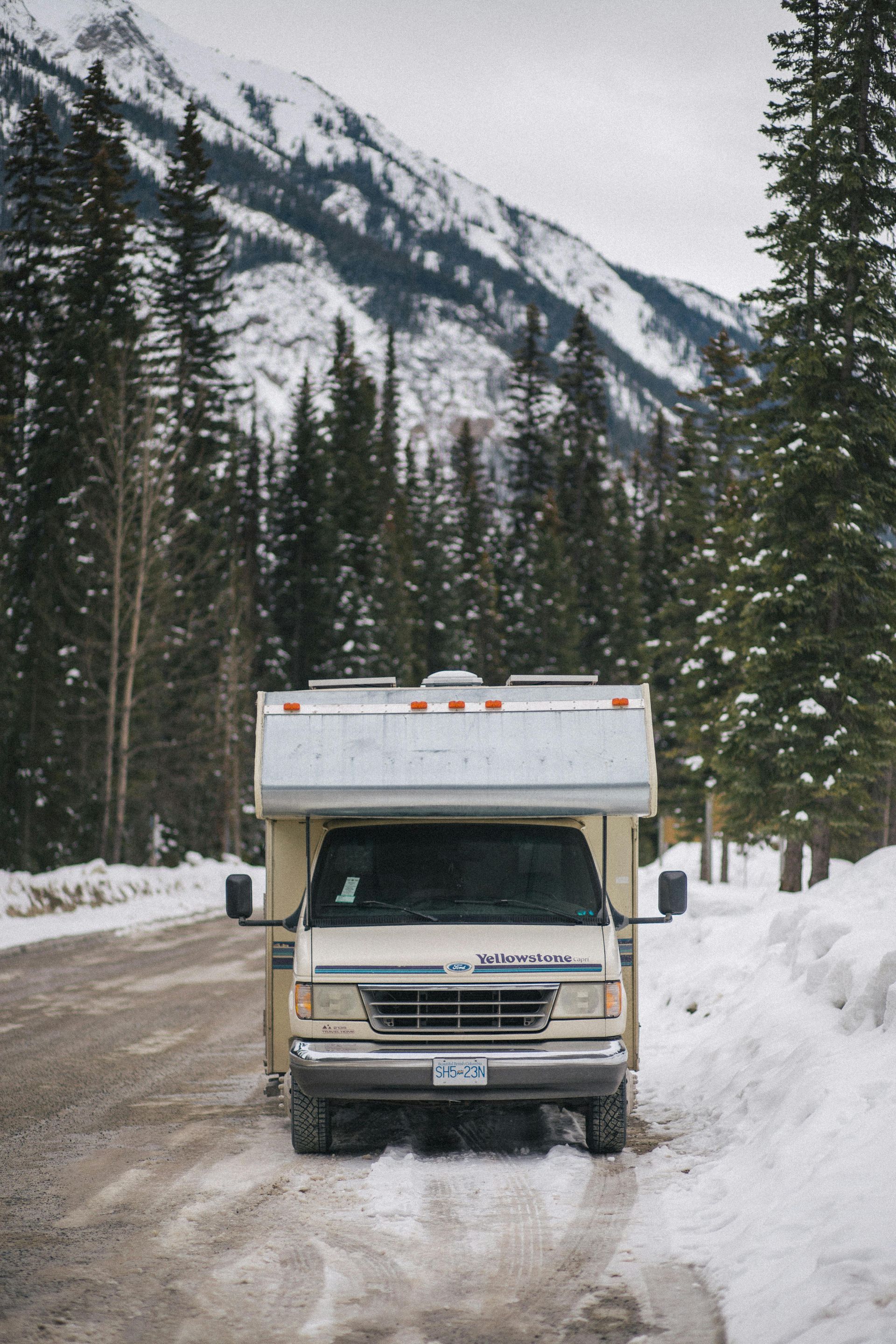
If you camp at elevation like the Rockies, the Sierra Nevada, the high desert of the Southwest you probably should know that your RV roof is taking a harder hit than you might realize.
Here's why:
At sea level, the atmosphere filters a significant portion of UV radiation before it reaches the ground.
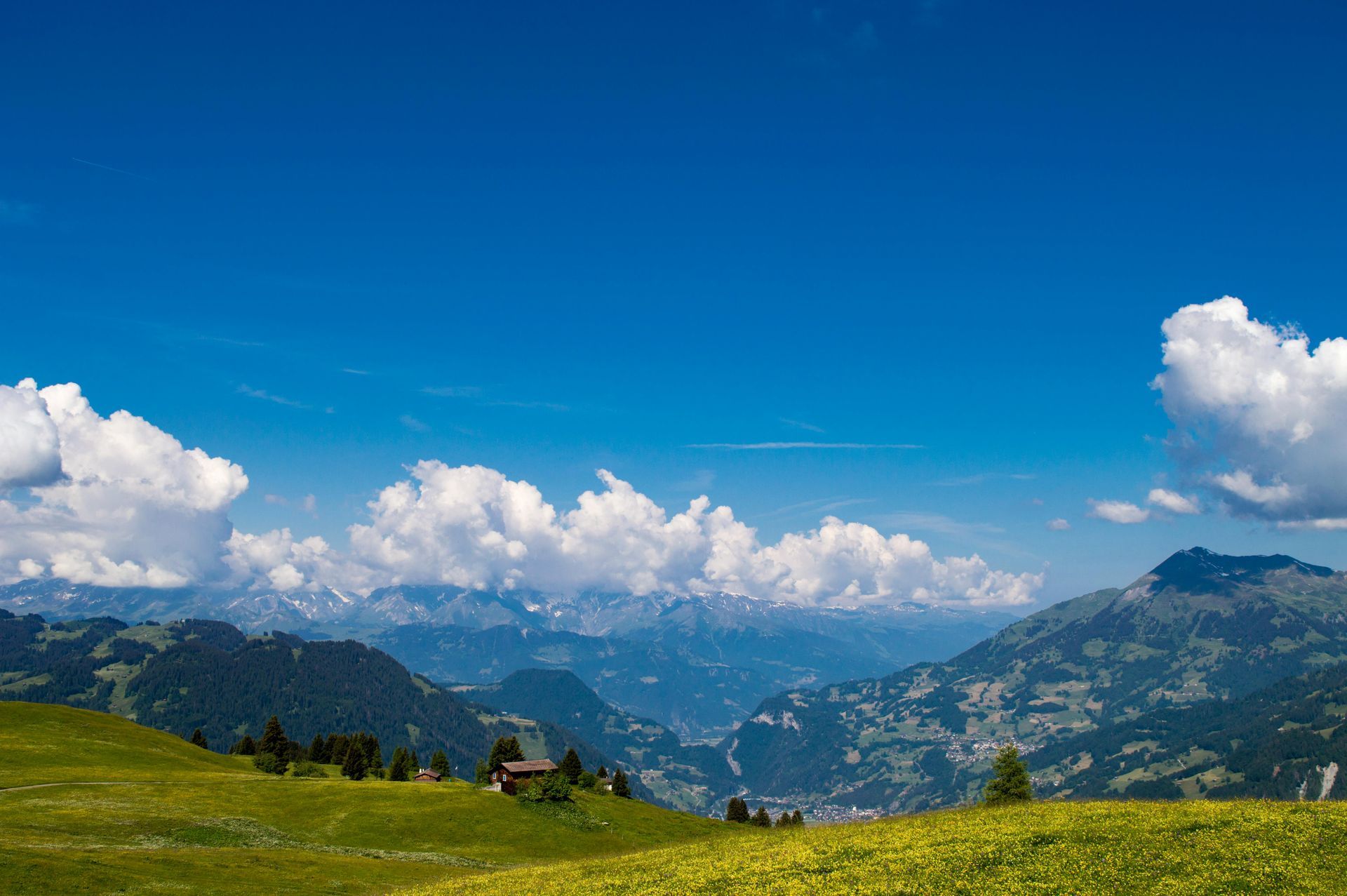
As you climb in altitude, that atmospheric buffer thins. UV intensity increases roughly 8–10% for every 1,000 feet of elevation gain. If you're camping at 8,000 feet — common in the Colorado Rockies, Taos, or the Eastern Sierra — your roof is absorbing approximately 60–80% more UV than it would at sea level.
This isn't theoretical. RV technicians working on rigs that have spent seasons at high altitude consistently see accelerated membrane oxidation, faster sealant breakdown around vents and skylights, and premature chalking on fiberglass — all driven by elevated UV exposure.
Full-timers who travel through high-elevation states need to factor this into their roof inspection and maintenance schedule.
Altitude camping is beautiful — but your roof can pay the price for it.
Warning Signs: What UV Damage Looks Like in Real Life
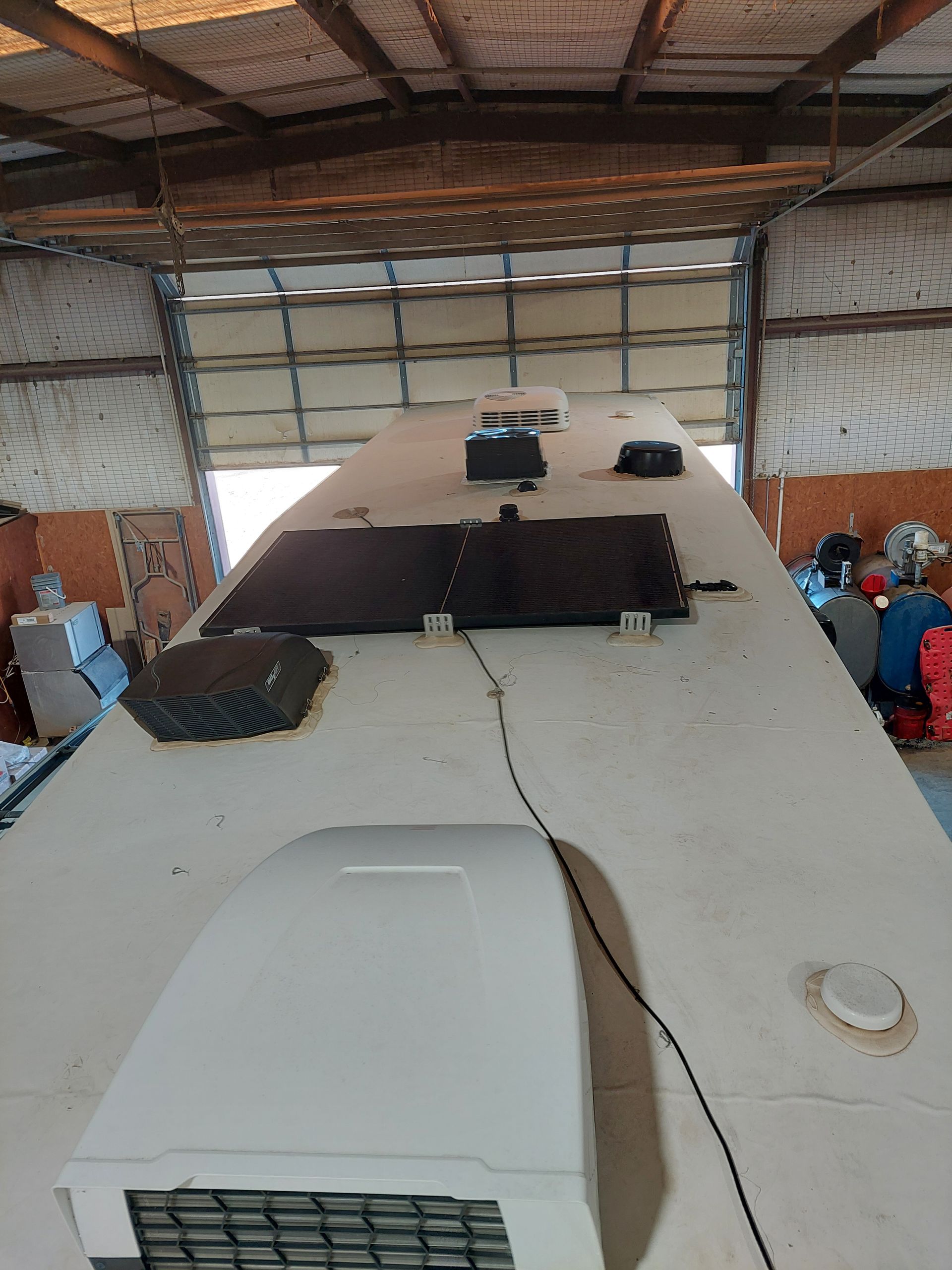
UV damage doesn't show up all at once. It progresses in stages, and catching it early is the difference between a maintenance job and a full replacement.
Here's what to look for:
Stage 1 — Early Signs (Act Now)
• Surface appears duller or less reflective than it used to be
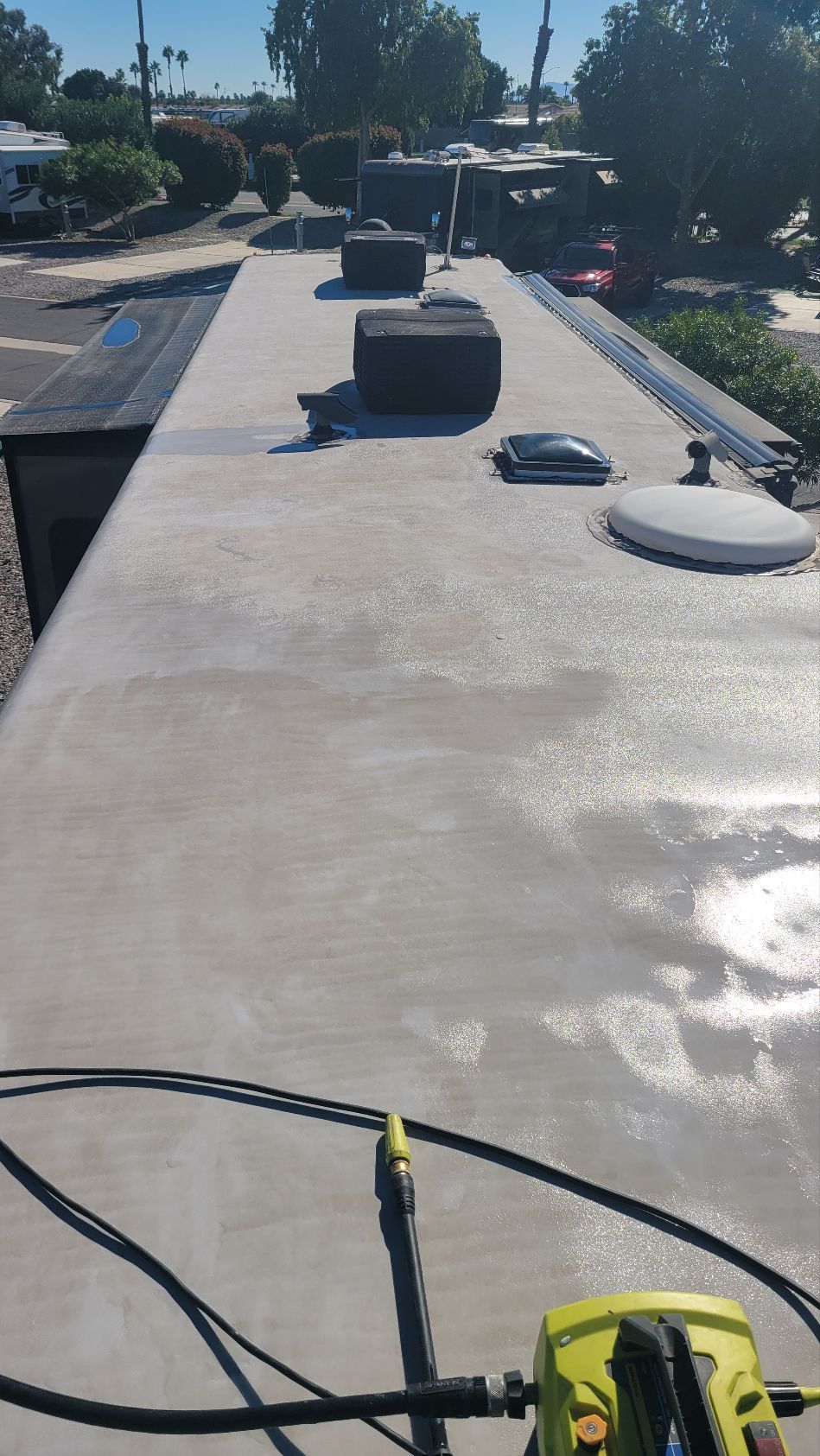
• Slight chalking or powdery residue when you run your hand across the roof
• Sealant around vents, antennas, and skylights beginning to crack or separate at edges
• Subtle color fading, especially on white TPO or gray EPDM membranes
Stage 2 — Moderate Damage (Repair Window Closing)
• Visible surface cracking or crazing (a web-like pattern of fine cracks)
• Seams beginning to lift or separate, even slightly
• Heavy chalking on fiberglass — a white powdery oxidation that transfers to your hand on
contact
• Sealant fully cracked, shrunken, or missing in spots around roof penetrations
• Water staining on interior ceiling panels — moisture may already be infiltrating
Stage 3 — Severe Damage (Replacement Territory)
• Membrane peeling, bubbling, or delaminating
• Full seam separation
• Active water intrusion or soft spots in the roof deck
• Mold or mildew odor inside the rig, particularly at slide corners or overhead cabinets
If you're seeing Stage 1 signs, you still have options. Stages 2 and 3 mean the clock is running on your repair window — and water intrusion at that point starts damaging the structural decking underneath, which is a much more expensive problem.
How Long Does an RV Roof Membrane Actually Last?
Here's the honest answer most RV manufacturers and dealers don't want to talk about.
The average RV roof membrane has a functional lifespan of approximately 10 years under normal conditions. Some membranes may push past that with excellent maintenance and favorable climate. Many don't make it.
- EPDM (Rubber) — Typical lifespan: 8–12 years. Primary UV failure mode: UV oxidation, ozone, thermal cycling.
- TPO — Typical lifespan: 10–15 years (with maintenance). Primary UV failure mode: UV-driven seam brittleness, puncture.
- PVC — Typical lifespan: 10–20 years (with UV inhibitors). Primary UV failure mode: UV plasticizer breakdown over time.
- Fiberglass — This is the one that trips people up. Structurally, fiberglass is extremely durable — it won't rot, it handles impact well, and it doesn't crack from thermal cycling the way rubber membranes do.
So the myth takes hold: fiberglass is indestructible. It isn't.
UV radiation goes after the gel coat surface layer constantly, causing oxidation that shows up as chalking, fading, and eventual surface breakdown. The structure underneath may be fine for decades — but if the gel coat is neglected, that protective layer fails, and the fiberglass substrate underneath becomes exposed and vulnerable.
Fiberglass roofs need regular UV protectant applied on a consistent schedule. Most owners have never done it once. That gap is where the damage accumulates — quietly, invisibly, and expensively.
The Fiberglass Myth: Why “Better” Doesn’t Mean “Set It & Forget It”
Let's talk about the most common misconception we run into in this industry: the belief that a fiberglass roof doesn't need protection because fiberglass is tough.
Fiberglass is tough. We're not going to pretend otherwise. It's more impact-resistant than rubber, it doesn't suffer from the same thermal cracking that EPDM does over time, and structurally, it can outlast most other roof materials by years. That part of the reputation is
earned.
But here's what gets left out of that conversation every single time: fiberglass roofs have a surface layer — the gel coat — that UV radiation attacks relentlessly, and most owners never protect it. Not once. Not ever. They buy the rig, hear "fiberglass roof," assume they're
covered, and move on.
What actually happens without regular UV protectant applied to a fiberglass roof:
- The gel coat begins to oxidize — you'll notice the surface losing its sheen and starting to look chalky or faded
- That chalky residue isn't just cosmetic — it's the gel coat breaking down and transferring off the surface
- Once the gel coat is compromised, the fiberglass substrate beneath becomes exposed to moisture, UV, and the elements
- At that point, you're no longer just dealing with a surface problem — you're dealing with potential structural degradation
'
The fix isn't complicated — but it has to be done consistently.
A proper UV protectant applied to a fiberglass roof creates a barrier that absorbs and deflects UV radiation before it can
attack the gel coat underneath. It's the same principle as sunscreen — and just like sunscreen, it only works if you actually use it on a regular schedule.
A chalking fiberglass roof is not automatically a lost cause. With professional cleaning, oxidation removal, and a quality UV-protective coating applied correctly, we can restore the surface and put years back on its lifespan. But the further the oxidation progresses, the
narrower that window gets.
If you're looking at a chalking, fading fiberglass roof and wondering how much life is left in it — that's exactly the call we're built for. An RV Roofing Solutions seamless membrane system puts UV protection back where it belongs, buys your rig years it wouldn't have had otherwise, and eliminates the annual caulking ritual that nobody actually enjoys doing.
We go deeper on fiberglass roof care, restoration, and the full chalking-to-coating process in our dedicated fiberglass blog post.
If you're dealing with a chalky or oxidized fiberglass roof, that's your next read. [Link to Fiberglass Roof Blog Post]
What Accelerates the Clock on Any Roof
Regardless of membrane type, these are the factors that take years off your roof's functional lifespan — and they're all common realities for full-time and frequent travelers:
- High-altitude camping (UV intensity increases 8–10% per 1,000 feet of elevation)
- Full-sun parking without a cover or shade structure — especially in Florida, the desert Southwest, or high-elevation sites
- Skipped inspections — damage that's caught early is a maintenance call; damage that's missed becomes a replacement
- Deferred sealant maintenance around vents, skylights, and A/C units — the #1 entry point for water intrusion
- Extreme temperature swings — the expand-and-contract cycle stresses seams and sealant year after year
What Slows It Down
The good news is that lifespan is not entirely out of your control. These habits make a measurable difference:
- UV-protectant coatings applied on schedule — critical for fiberglass, highly beneficial for all membrane types
- Annual professional inspections and proactive sealant maintenance before problems start
- Covered or shaded storage when the rig isn't in use
Working with professionals who know what early-stage damage looks like and can stop it before it becomes structural
This is the pattern we see over and over: owners who do one or two of these things do okay.
Owners who do all of them routinely get 15+ years out of a roof that was rated for 10.
But the ones who skip the list entirely are usually the ones calling us after a rain event.
What You Can Do Right Now to Slow UV Damage
You don't have to wait for a professional visit to start protecting your roof. Here's what makes a real difference:
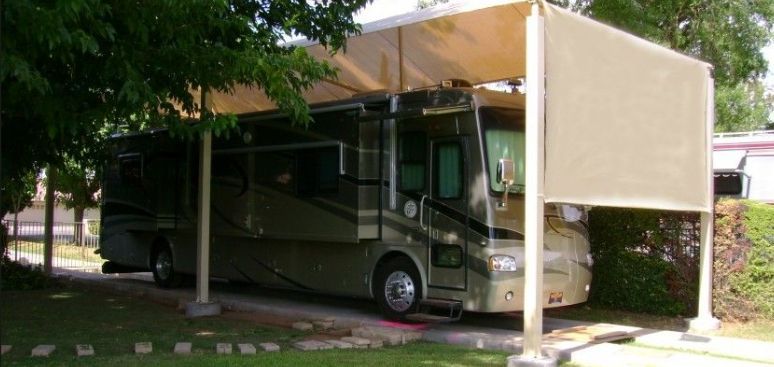
- Park with purpose. Shade — even partial shade — reduces UV load on your roof. If shade isn't available, a quality roof cover designed for RVs makes a measurable difference for rigs in storage.
- Don't skip annual inspections. An hour of professional eyes on your roof each year can catch Stage 1 damage before it becomes Stage 2. The inspection pays for itself the first time it catches a sealant failure before it leaks.
- Reseal on schedule. Roof sealant needs attention every 12–18 months at minimum — more frequently for high-altitude campers and those in hot, sunny climates.
- Clean your roof regularly. Dirt, algae, and debris trap moisture and accelerate UV degradation. A clean roof is a longer-lived roof.
- Ask about UV-protective coatings. If your roof is more than five years old and you've never had a protective coating applied, it's worth a conversation. This is one of the highest-value maintenance investments you can make.
Don't Wait Until It's Leaking
UV damage is one of those things that feels invisible right up until it isn't.
By the time water is coming in through your ceiling, you're not dealing with a roof problem anymore — you're
dealing with a structural problem. The cost to repair a failing membrane is a fraction of the cost to replace a damaged roof deck.
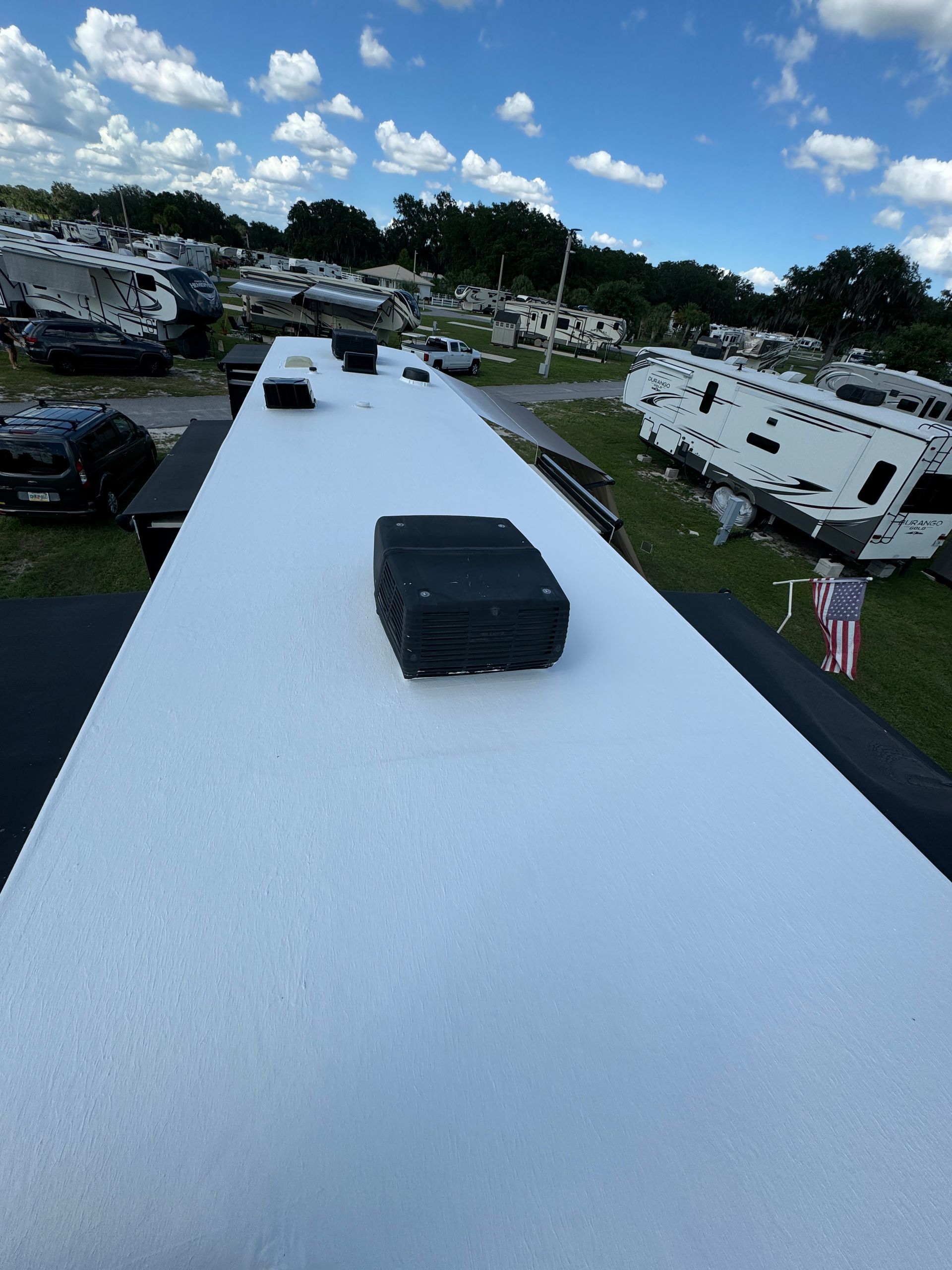
How RV Roofing Solutions Can Extend the Life of Your Aging Roof
This is where our work comes in — and it's the part that most RV owners don't know is possible until they're already dealing with a failed roof.
RV Roofing Solutions is a veteran-owned mobile roofing company. We come to you — your campsite, your driveway, your storage facility.
We specialize in extending the life of aging RV roofs through professional inspection, complete sealant removal and replacement, and our
seamless membrane system — and we do it with the craftsmanship and straight talk you'd expect from people who actually live this life.
What we can do for a UV-damaged or aging roof
RV Roofing Solutions isn't just a coating company. We're an alternative — a professional custom system installed by people who understand that a roof done right takes more than an afternoon.
Here's what working with us actually looks like:
Free one-on-one consultation.
Before anything else, we talk. You tell us what you're seeing, we tell you what it means. No obligation, no pressure — just an honest conversation about where your roof stands and what your options are.
Affordable roof inspection — find us at a rally.
If you catch us at an event, we offer an on-site roof inspection that includes 20 to 25 photos of your roof's current condition. Even if you're not ready to move forward with an installation, you'll leave knowing exactly what you're working with. That's worth something on its own.
The inspection happens at installation — not before.
Our clients make their decision before we're on-site. The detailed roof inspection is conducted at the time of installation, so we're working from the actual condition of your roof — with an estimate that was made weeks earlier.
We measure termination bar to termination bar.
Every roof is measured precisely from edge to edge. No guessing, no rounding. Your system is built for your specific roof.
Complete sealant removal.
We don't caulk over old, cracked, or shrunken sealant. We remove it entirely. Every vent, every skylight, every antenna base, every A/C unit is resealed correctly as part of the system. And once we're done, you won't be crawling up there to re-caulk it year after year.
Our seamless membrane system — with UV protection built into the formula.
This is the part that matters most. UV protection isn't just a coating we apply on top. It's engineered directly into the material we use.
That means for the next 10 to 15 years, your roof has a dedicated UV defense layer working from within. You're not getting a surface treatment. You're getting a system.
And because we hear this word thrown around too loosely in this industry — we need to be clear about something. When people hear "coating system," they often picture a crew showing up, rolling something on in a few hours, and calling it done. That is not what we do.
Our process takes a minimum of three days in good weather. The materials are embedded — not just applied. That difference is everything when it comes to how long it holds and how well it performs.
Your roof will also run noticeably cooler.
Our system typically reduces interior temperature by 5 to 12 degrees.
That's real comfort on a summer travel day and real savings on your A/C.
Low VOC — no off-gassing, no waiting.
Our formula is low VOC. There's no chemical smell lingering for weeks after installation, no airing out period, and yes... you can stay in your RV while the work is being done.
Standard installation: three days. Decking or catastrophic repairs: up to a week.
If additional damage is discovered during installation, nothing additional is done without your written consent.
A change order is required before any work beyond the original scope begins. Period.
We come to you.
No shop. No hauling your rig somewhere. We coordinate around your schedule and your travel style.
Nothing to Lose. Everything to Know. A free consultation costs you nothing and leaves you with a clear picture of exactly where your roof stands. We'll send a written estimate — no pressure, & even give you some time to think it over and discuss it with your partner, no one will call you three times a week. When you're ready, we're ready. And if you're not ready yet, you'll at least know what you're working with.
Give us a call toll-free at 888-847-7010
RV Roofing Solutions exists to help you get ahead of repairs, although we do those too. We're a mobile, veteran-owned company with teams that come to you, give you straight answers, and do the work right. Whether you're seeing early warning signs or you just want to know where your roof stands before your next season of travel, we're here for it.
Contact Us
You might also like
RV Roofing Solutions' Blog